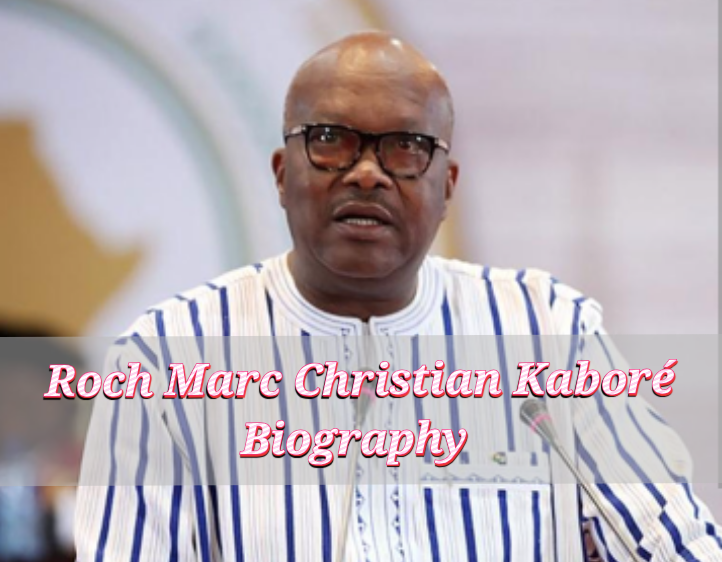
Roch Marc Christian Kaboré Biography
Roch Marc Christian Kaboré was the President of Burkina Faso from December 2015 until January 2022. He is known as the first civilian leader in almost fifty years to take power through free elections after decades of military rule and strongman politics. Born in 1957, he grew up in a comfortable family, studied in France, worked as a banker, and later spent more than twenty years in high government positions. In 2014 he left the ruling party and helped lead the movement that ended Blaise Compaoré’s 27-year rule. One year later, the people elected him president. His time in office brought hope for democracy but also faced huge problems with terrorist attacks and two military coups. Today, at age 68 (as of 2025), he lives quietly in Ouagadougou after the army removed him from power in January 2022. This article tells his story in a simple and clear way.
Early Life
Roch Marc Christian Kaboré was born on 25 April 1957 in Ouagadougou, the capital of what was then called Upper Volta (the country changed its name to Burkina Faso in 1984). His father, Charles Bila Kaboré, was an important government official and banker. His mother raised the family in the Catholic faith. Roch belongs to the Mossi ethnic group, the largest group in the country.
He grew up in a middle-class neighbourhood and went to good primary schools between 1962 and 1968. Life was comfortable compared to most children in the countryside who worked on farms. From a young age he saw the big difference between rich and poor families in his country. These early years gave him both advantages and a feeling of responsibility toward ordinary people.
Roch Marc Christian Kaboré Education
In 1968, young Roch started secondary school at Collège Saint Jean-Baptiste de la Salle, a respected Catholic school in Ouagadougou. He did well in his studies. In 1975, at age 18, he travelled to France for university. He studied economics at the University of Burgundy in the city of Dijon. He finished his bachelor’s degree in 1979 and continued for a master’s degree in management, which he received in 1980.
While in France, he joined student groups that supported left-wing ideas and fought against colonialism. These years in Europe shaped his thinking about justice and development. He returned home ready to use his knowledge to help Burkina Faso grow.
Roch Marc Christian Kaboré Career
Roch started working in 1981 at the International Bank of Burkina (BIB), the biggest commercial bank in the country. He moved up quickly. By 1984 he became director of the bank’s international department. In 1989, at only 32 years old, he was named general director (CEO) of the bank. He kept this job until 1997 and helped the bank become stronger during difficult economic times.
At the same time, he entered politics. In 1994 President Blaise Compaoré appointed him Prime Minister, making him one of the youngest prime ministers in Africa at that time. He served in many important roles:
- Minister of Transport and Communications
- Minister of Finance
- Several times elected member of the National Assembly
- President of the National Assembly from 2002 to 2012
- President of the ruling party CDP (Congress for Democracy and Progress)
After 2012, he disagreed with President Compaoré’s plan to change the constitution and stay in power longer. In January 2014, Roch and many friends left the CDP and created a new party called MPP (People’s Movement for Progress). Ten months later, huge protests forced Compaoré to leave the country. In November 2015, Roch won the presidential election with 53 percent of the votes in the first round. He became president on 29 December 2015. In November 2020 he was re-elected for a second term with 57 percent of the votes.
Roch Marc Christian Kaboré Personal Life
Roch Marc Christian Kaboré is married to Sika Bella Kaboré, a health professional. They have three children together. The family is Catholic and keeps a low profile. Madame Sika Kaboré worked on projects for women’s health and education during her time as First Lady. Roch is known to enjoy reading and listening to music in his free time. He speaks French, English, and his mother tongue Mooré fluently. Even after leaving power, he stays close to his family and avoids public arguments.
Conclusion
Roch Marc Christian Kaboré’s life shows both the possibilities and the difficulties of leadership in West Africa. He started with many advantages: good education, strong family connections, and early success in banking. He spent years inside the old system, then chose to stand with the people when change was needed in 2014. His election in 2015 brought hope that Burkina Faso could have stable civilian rule.
Yet the growing terrorist attacks in the Sahel region became too big a problem to solve quickly. Many soldiers and citizens died, and the army lost trust in his government. On 24 January 2022, military officers removed him from power. He was kept under house arrest for several months and released in April 2022.
Today he is remembered as the leader who helped bring back civilian democracy after many years of military and one-man rule. At the same time, his story reminds everyone how hard it is to keep a country safe and united in difficult times. His journey from student activist to banker to president offers valuable lessons for young people who want to serve their nations.
FAQs
When and where was Roch Marc Christian Kaboré born?
He was born on 25 April 1957 in Ouagadougou, Upper Volta (now Burkina Faso).
What did he study in university?
He studied economics and management at the University of Burgundy in Dijon, France, and finished his master’s degree in 1980.
What was his job before entering politics full-time?
He was the general director (CEO) of the International Bank of Burkina from 1989 to 1997.
How did he become president?
He won the presidential election on 29 November 2015 with 53 percent of votes in the first round and took office on 29 December 2015.
How long was he president?
He served from 29 December 2015 to 24 January 2022 (six years and one month).
Why was he removed from power?
On 24 January 2022, military officers carried out a coup because of anger over the government’s handling of terrorist attacks and lack of equipment for soldiers.
Is he still in politics today?
After the 2022 coup, he stepped away from active politics and lives privately in Ouagadougou.
What party did he create in 2014?
He co-founded the People’s Movement for Progress (MPP).
How many times was he elected president?
He was elected twice: in November 2015 and again in November 2020.
What is his religion and family background?
He is Catholic, married to Sika Bella Kaboré, and they have three children.