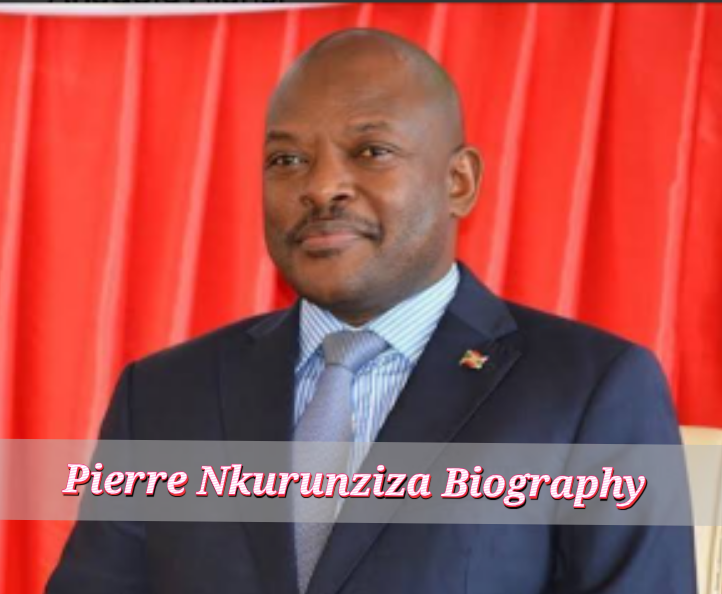
Pierre Nkurunziza Biography
Pierre Nkurunziza lived a life full of changes. He started as a teacher and sports coach. Then he became a rebel fighter during a long civil war in Burundi. Later, he rose to become the president of his country for almost 15 years. This made him the longest serving leader in Burundi’s history. Born on December 18, 1964, in Bujumbura, the capital city of Burundi, Nkurunziza grew up in a time of ethnic tensions between Hutu and Tutsi groups. His father was a politician who died in violence in 1972. This event shaped his early views on politics and conflict.
Nkurunziza joined a rebel group in the 1990s. He fought in the Burundian Civil War, which lasted from 1993 to 2005. The war killed about 300,000 people. After the war, he helped in peace talks. He became president in 2005. His time in office had both good and bad parts. He worked on rebuilding the country after the war. He introduced free education for young children and free health care for mothers. But he also faced criticism for staying in power too long. In 2015, his choice to run for a third term caused protests and violence. Many people died, and hundreds of thousands left the country as refugees.
Nkurunziza died on June 8, 2020, at age 55. The government said it was from a heart attack. Some people thought it might be linked to COVID 19, but this was not confirmed. He left behind a mixed legacy. Some see him as a hero who ended the civil war. Others view him as a leader who limited freedoms and caused more division. This biography looks at his life step by step. It covers his early years, schooling, work, family, and impact on Burundi. The goal is to help readers understand his story in a simple way. We use facts from reliable sources to keep it accurate.
Burundi is a small country in East Africa. It gained freedom from Belgium in 1962. Ethnic groups like Hutu, Tutsi, and Twa live there. Hutu make up most of the people, about 85 percent. Tutsi are about 14 percent. Conflicts between these groups have happened many times. In 1972, a genocide killed many Hutu, including Nkurunziza’s father. In 1993, the killing of the first Hutu president started the civil war. Nkurunziza’s life connects to these events. He came from a mixed family. His father was Hutu, and his mother was Tutsi. This background helped him push for peace later.
As president, Nkurunziza focused on unity. He signed peace deals like the Arusha Accords in 2000. These accords set rules for sharing power between ethnic groups. For example, government jobs were split: 60 percent for Hutu and 40 percent for Tutsi. This helped end the fighting. But in his later years, he changed rules to stay in power. This led to a crisis in 2015. Protests turned violent. A coup attempt failed. The country faced sanctions from other nations. Nkurunziza’s rule became more closed off. He limited media and arrested opponents.
Pierre Nkurunziza Early Life
Pierre Nkurunziza was born on December 18, 1964, in Bujumbura. This city is the economic center of the country. At that time, Burundi had just become independent from Belgium two years earlier. The nation faced challenges in building unity among its people. Nkurunziza’s family came from Ngozi Province in the north. His full name was Pierre Nkurunziza. He was one of six children in his family.
His father, Eustache Ngabisha, worked as a politician. Eustache was a Hutu and part of the Union for National Progress party. He served as a member of parliament in 1965. He also became governor of two provinces. But in 1972, violence broke out. This was known as the Ikiza genocide. It targeted Hutu people. About 100,000 to 300,000 Hutu died. Eustache was killed during this time. Pierre was only seven years old. This loss affected him deeply. It showed him the dangers of ethnic hatred.
His mother, Domitille Minani, was a Tutsi. She worked as an assistant nurse. After her husband’s death, she raised the children alone. The family lived in a mixed ethnic home. This was rare in Burundi, where Hutu and Tutsi often lived apart. Pierre grew up seeing both sides of the divide. He learned about tolerance from his parents. But the 1972 events left scars. Many families lost loved ones. Schools and communities split along ethnic lines.
As a child, Nkurunziza lived in Ngozi Province. He attended primary school there. The area was rural and poor. People farmed for a living. Coffee was a main crop. Young Pierre helped on the farm sometimes. He played with friends from different groups. Sports became his escape. He loved football from a young age. It helped him make friends across divides.
In 1993, more violence hit Burundi. The first Hutu president, Melchior Ndadaye, was killed by Tutsi soldiers. This started the civil war. Nkurunziza was in his late 20s. He saw friends and family suffer. Three of his siblings died fighting in the war. Two others died in ethnic attacks. Only he and one sister survived. These losses pushed him toward action. But in his early life, he stayed out of politics. He focused on studies and sports.
Pierre Nkurunziza Education
Pierre Nkurunziza valued learning from a young age. After primary school in Ngozi, he went to a top secondary school. This was the athenee in Gitega. Gitega is a central city in Burundi. The school was known for good teaching. He studied there during his teen years. Ethnic quotas existed in education back then. Hutu students like him faced limits. But he did well.
In 1987, he joined the University of Burundi. This is the main university in the country. It is in Bujumbura. He studied physical education and sports. He graduated in 1990 with a bachelor’s degree. His focus was on teaching sports. During college, he played football. He joined clubs and built skills as a player and coach.
After graduation, Nkurunziza started teaching. He worked as a physical education teacher at a high school in Muramvya. This town is near Bujumbura. He taught students about fitness and games. In 1992, he became an assistant lecturer at the University of Burundi. He taught sports science to college students. He also coached football teams. He led Muzinga FC and Union Sporting. These were in Burundi’s top league.
His education stopped in 1995 because of the civil war. Army attacks on the university killed many Hutu students. Nkurunziza fled to safety. He could not continue teaching. But his sports knowledge helped later. As president, he used sports to bring people together. He built stadiums and promoted games for peace.
Pierre Nkurunziza Career
Pierre Nkurunziza’s career had many stages. He began as a teacher. Then he became a rebel. Later, he entered politics and became president. This section covers these steps in detail.
First, as a teacher from 1990 to 1995. He worked in schools and the university. He taught physical education. He coached football. This job suited his education. But the civil war changed everything.
The Burundian Civil War started in 1993. After President Ndadaye’s death, Hutu groups fought the Tutsi army. In 1995, soldiers attacked the university. They killed about 200 Hutu students. Nkurunziza escaped. He hid in the countryside. The government sentenced him to death in 1998. They said he planted land mines. But he denied this.
In 1995, he joined the National Council for the Defense of Democracy Forces for the Defense of Democracy. This was the CNDD FDD. It was a Hutu rebel group. He started as a fighter. He rose quickly. By 1998, he was general secretary. He handled political and military work. People called him Pita. He survived attacks, like one in 2001 near Gitega. He saw it as a sign from God.
As leader, he pushed for peace. He included Tutsi in the group. He became president of CNDD FDD on August 28, 2000. He led talks for end of war. In 2000, the Arusha Peace Accords were signed. Nelson Mandela helped. The accords set power sharing. CNDD FDD joined later in 2003. Nkurunziza became minister of state for good governance in the transitional government. This was under President Domitien Ndayizeye.
In 2004, he won control of the party from Leonard Nyangoma. In 2005, Burundi held elections. CNDD FDD won many seats. Parliament chose Nkurunziza as president on August 19, 2005. He took office on August 26, 2005. This ended the transitional period.
His first term was from 2005 to 2010. He focused on peace. He ended the last rebel group, PALIPEHUTU FNL, in 2008. He canceled debts with help from the Paris Club in 2009. He joined African Union missions. He started free primary education. This helped many children go to school. He also made maternity care free. This lowered deaths for mothers and babies. Economy grew at 4 to 5 percent per year. But corruption grew. He jailed a party rival, Hussein Radjabu, in 2008.
In 2010, he ran for second term. He won with 91 percent of votes. But opposition boycotted. They said it was unfair. His second term was 2010 to 2015. Tensions rose. In 2014, he banned jogging in groups. He said it hid protests. On April 25, 2015, he said he would run for third term. The Arusha Accords said no more than two terms. But the court said it was okay on May 5, 2015.
Protests started in Bujumbura. Police used force. On May 13, 2015, General Godefroid Niyombare tried a coup. It failed. Nkurunziza returned. Violence killed over 1,200 people. About 400,000 fled. The Imbonerakure youth group was blamed for attacks. Amnesty International reported abuses. Elections happened in July 2015. Nkurunziza won with 69 percent.
His third term was 2015 to 2020. Burundi faced isolation. Other countries cut aid. In 2017, Burundi left the International Criminal Court. In 2018, a referendum changed the constitution. Terms became seven years. He could run again. But in June 2018, he said he would not. He got the title supreme guide for patriotism.
In 2019, three schoolgirls were arrested for drawing on his photo. Human Rights Watch campaigned for their release. In March 2020, he picked Evariste Ndayishimiye as party candidate. Elections in May 2020 had issues. He expelled WHO staff during COVID 19. His party won.
Pierre Nkurunziza Personal Life
Pierre Nkurunziza had a rich personal life outside politics. He married Denise Bucumi in 1994. She was a pastor. They had six children together. Reports said he had up to six wives in total. This followed some cultural and faith practices. But his main family was with Denise. She supported him in public. She worked on charity for women and children.
Religion played a big role. He became a born again Protestant in the 1990s. During the war, he said faith saved him. He often prayed and sang in church. As president, he mixed faith with rule. He called himself chosen by God. He built churches and held prayer events. His faith shaped policies, like anti corruption drives.
Sports were his passion. He loved football. He played and coached. He owned a team called Hallelujah FC. He used games to unite people. He built sports centers. He jogged and cycled. But he banned group jogging in 2014 for security.
He lived simply at first. But later, he had luxury homes. His net worth was not clear. Some said he had wealth from power. He faced health issues like diabetes. In 2020, he died suddenly. His personal side showed a man of faith and fun. But it mixed with his public role.
Conclusion
Pierre Nkurunziza left a complex mark on Burundi. He rose from teacher to president. He helped end the civil war through talks. His rule brought some growth and services. But his third term caused pain and division. Many died or fled. His death in 2020 ended his time. Evariste Ndayishimiye took over. Burundi still faces challenges like poverty and rights. Nkurunziza’s story teaches about power and peace.
FAQs
How did Pierre Nkurunziza die?
He died on June 8, 2020, from a heart attack at a hospital in Karuzi. Some suspected COVID 19, but officials said cardiac arrest.
What was Pierre Nkurunziza’s role in Burundi’s civil war?
He joined CNDD FDD in 1995 as a fighter. He became leader in 2000. He fought the army and pushed for peace talks.
Why was his third term controversial?
The Arusha Accords limited terms to two. His 2015 run caused protests, a failed coup, and violence with over 1,200 deaths.
Who succeeded Pierre Nkurunziza?
Evariste Ndayishimiye became president in June 2020 after winning elections.
What was Pierre Nkurunziza’s family like?
He married Denise Bucumi in 1994. They had six children. His father died in 1972 violence. His mother was Tutsi. Five siblings died in the war.
Was Pierre Nkurunziza a dictator?
Some called him authoritarian for limiting freedoms and using force. But he had elections and supporters saw him as a peace maker.