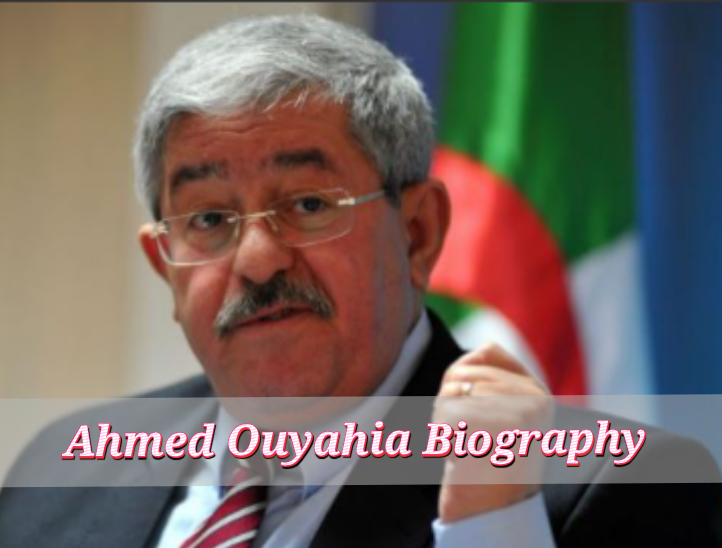
Ahmed Ouyahia Biography
Ahmed Ouyahia is one of the most important political figures in modern Algeria. He served as Prime Minister of Algeria four different times between 1995 and 2019. This made him the person who held the job the longest in the country’s history after independence.
He worked closely with President Abdelaziz Bouteflika for many years and helped run the country during hard times, including the civil war in the 1990s and big street protests in 2019. In the end, he was arrested in 2019 and later sent to prison for corruption. Today, at age 73 (in 2025), he is still in prison serving long sentences. His story shows both the power and the problems of Algerian politics after 1962.
Ahmed Ouyahia Early Life
Ahmed Ouyahia was born on July 2, 1952, in the small village of Bouadnane, in Iboudraren commune, Tizi Ouzou province. This area is in the heart of Kabylie, a mountainous region where most people are Berbers and speak the Kabyle language.
His family was modest. Not much is known about his parents or brothers and sisters because he has always kept his private life quiet. Growing up in Kabylie during the 1950s and early 1960s meant he saw the last years of the war against France and the first years of independent Algeria. These events shaped the country and also shaped him.
Ahmed Ouyahia Education
Ouyahia studied in Algiers. He finished secondary school at Lycée El Idrissi and passed the baccalauréat exam in literature in 1972. That same year, he scored the highest mark in the national exam to enter the famous École Nationale d’Administration (ENA) in Algiers. He chose the diplomacy section and graduated in 1976.
Many future ministers and ambassadors came from the same school, so his classmates became important people in government later.
Ahmed Ouyahia Career
Ahmed Ouyahia’s career lasted more than 43 years and took him from junior diplomat to the highest office in the country four times. Below is a clear, step-by-step account of how he rose, what he did in each major job, and why each period mattered for Algeria.
Early Diplomatic Years (1976–1988) After finishing military service in 1978 as a press officer at the presidential palace, Ouyahia joined the Ministry of Foreign Affairs. He first worked on the Africa desk. In 1980 he was sent to Ivory Coast as a counsellor at the embassy. In 1982 he moved to New York to serve in Algeria’s Permanent Mission to the United Nations. For six years he worked on African files at the Security Council. This period gave him deep knowledge of international law and conflict resolution.
Return to Algiers and Rise in African Affairs (1988–1993) In 1988 he came back to Algiers and became Director of the Africa Department. In 1992 President Abdelaziz Belaid sent him as ambassador to Mali. While there, he helped negotiate the 1992 Pacte National that ended the first Tuareg rebellion. The agreement is still seen as one of the few successful peace deals in the Sahel at that time.
Entry into the Inner Circle of Power (1994–1995) In January 1994 President Liamine Zéroual chose Ouyahia as his cabinet director. This job put him at the heart of decision-making during the darkest years of the civil war. He helped prepare the 1995 presidential election and managed secret talks with some Islamist leaders who wanted to stop fighting.
First Term as Prime Minister (31 December 1995 – 15 December 1998) At the age of 43, Ouyahia became the youngest Prime Minister in Algeria’s history. His main tasks were to keep the economy running and to support the army’s fight against armed groups. He introduced tough austerity measures, cut public-sector wages, and started anti-corruption campaigns. These steps were painful but helped Algeria get new loans from the IMF and World Bank. In 1997 he co-founded the Democratic National Rally (RND) party, which won the parliamentary elections that year. He left office in December 1998 after President Bouteflika was elected.
Minister of Justice (1999–2002) President Bouteflika kept Ouyahia in the government as Minister of Justice. In this role he helped write the 1999 Civil Concord Law that offered amnesty to thousands of fighters who laid down their weapons. He also worked on judicial reforms and represented Algeria in peace talks between Ethiopia and Eritrea that led to the Algiers Agreement signed on 12 December 2000.
Second Term as Prime Minister (2003 – 2006) In May 2003 Bouteflika brought him back as Prime Minister after dismissing Ali Benflis. Ouyahia faced long teachers’ and public-sector strikes. He pushed for privatisation of state companies and more foreign investment in oil and gas. Living conditions stayed difficult for many families, and unions strongly opposed his policies. He resigned in May 2006 after tensions with the FLN party inside the government coalition.
Third Term as Prime Minister (2008 – 2012) In June 2008 Bouteflika appointed him Prime Minister for the third time. This period was calmer because the civil war had ended. Ouyahia focused on big infrastructure projects (highways, housing, new tram lines in Algiers and Oran) paid for by high oil prices. He also managed the response to the Arab Spring protests that reached Algeria in 2011, keeping demonstrations small compared to Tunisia or Egypt.
Quiet Years and Return to the Presidency Staff (2013 – 2017) After leaving office in 2012, he stayed Secretary-General of the RND and worked as Minister-Director of Cabinet at the Presidency from 2014 to 2017. This job gave him daily access to President Bouteflika, who was already very ill and rarely appeared in public.
Fourth and Final Term as Prime Minister (16 August 2017 – 11 March 2019) When Bouteflika’s health became impossible to hide, Ouyahia was called back for a fourth time in August 2017. He became the public face of the regime. He tried to calm the economy by cutting imports and encouraging local production. In December 2018 he banned the full-face veil (niqab) in public offices. When massive peaceful protests (the Hirak) started in February 2019 against Bouteflika’s plan to run for a fifth term, Ouyahia first told protesters to stop. On 11 March 2019 he resigned, and one month later Bouteflika also stepped down.
Post-Government Roles and Arrest (2019 – present) After resigning, Ouyahia stayed Secretary-General of the RND until June 2019. On 12 June 2019 he was placed in preventive detention. Military investigators questioned him about corruption in car-assembly plants and public contracts. In December 2019 he received a 15-year prison sentence (later confirmed on appeal). In 2021 another trial added 7 years for a tourism-project case. As of November 2025 he remains in El Harrach prison.
Ahmed Ouyahia Personal Life
Ouyahia is married and has children, but he has always kept his family away from the public eye. Very few photos or details exist about his wife or children. He speaks Arabic, French, and some Kabyle. People who worked with him say he is a hard worker who reads a lot and speaks directly. He does not drink alcohol and follows a simple lifestyle in public.
Ahmed Ouyahia Achievements
Even with the problems at the end of his career, Ouyahia has real successes that people remember:
Helped end the Tuareg rebellion in Mali by writing the 1992 Pacte National when he was ambassador.
Played a big role in the 2000 peace agreement between Ethiopia and Eritrea, signed in Algiers.
Worked on the 2005 agreement that calmed the Kabylie region after the Black Spring protests in 2001.
Managed the country during very difficult years of the civil war (1995–1999) and kept the government running.
Helped build the RND into one of the strongest parties that supported the government for more than 20 years.
These actions earned him respect as a skilled diplomat and crisis manager.
Ahmed Ouyahia Controversies and Legal Battles
Ouyahia’s career also has many dark moments:
During the 1990s civil war, he supported the “eradicator” policy that used strong force against Islamist groups. Many human-rights groups say this caused thousands of disappearances.
In 2001, as a top official, he was part of the government when security forces killed more than 120 young protesters in Kabylie during the Black Spring.
After the Hirak protests started in February 2019, he first said the protesters should stop, then resigned in March 2019.
June 2019: Arrested on corruption charges.
December 2019: Sentenced to 15 years in prison for illegal funding of political activities and misuse of public money (case involving car factories). The sentence was confirmed on appeal in 2020.
2021: Received another 7-year sentence in a different corruption case about a tourism project.
He admitted in court that he received gold bars as gifts from Gulf countries and sold some on the black market, but said this was normal practice.
As of November 2025, he is still in El Harrach prison near Algiers, serving sentences that add up to more than 20 years.
Conclusion
Ahmed Ouyahia spent more than 40 years near the center of power in Algeria. He helped the country survive its darkest years and made peace in other African countries. At the same time, he became a symbol of the old system that many Algerians wanted to change in 2019.
His rise and fall show how hard it is to keep power in Algeria for a long time. Today, young people in the country see him as part of the past they want to leave behind, while some older officials still respect his skills and experience. His story is not finished, but for now, it is the story of a man who reached the very top and then lost everything when the people demanded change.
FAQs
How many times was Ahmed Ouyahia Prime Minister of Algeria?
Four times: 1995–1998, 2003–2006, 2008–2012, and 2017–2019.
Where was Ahmed Ouyahia born?
He was born on July 2, 1952, in Bouadnane, Tizi Ouzou province, in the Kabylie region.
Why is Ahmed Ouyahia in prison?
He was found guilty in several corruption cases after 2019 and is serving long prison sentences.
What party did Ahmed Ouyahia lead?
He was the long-time Secretary-General of the Democratic National Rally (RND).
Is Ahmed Ouyahia Berber?
Yes, he comes from a Kabyle Berber family in the Tizi Ouzou area.
What big peace agreements did he help create?
The 1992 Mali peace deal with the Tuaregs and the 2000 Ethiopia-Eritrea peace agreement signed in Algiers.
When did Ahmed Ouyahia resign as Prime Minister for the last time?
March 11, 2019, during the Hirak protests.
How old is Ahmed Ouyahia in 2025?
He is 73 years old.