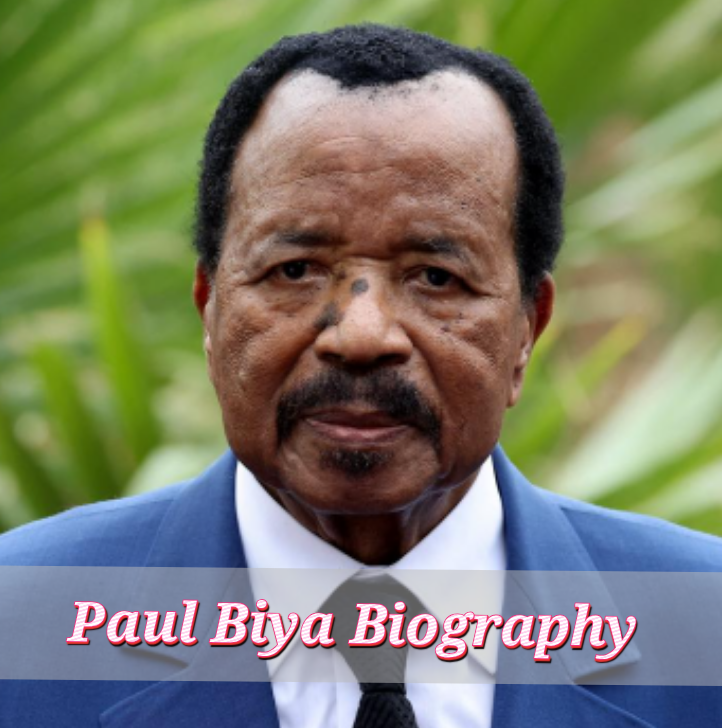
Paul Biya Biography
Paul Biya stands as one of Africa’s most enduring political figures. He has led Cameroon as president since November 6, 1982. At 92 years old, he won another term in the October 2025 presidential election, marking his eighth victory. This win came amid protests and claims of unfair voting practices, but official results showed him with a strong majority. Born in a small village during colonial times, Biya rose through education and government roles to become a key player in his country’s story. His long rule has brought both praise for stability and criticism for limiting freedoms.
This biography looks at Biya’s journey in simple terms. It covers his early days, schooling, work in politics, successes, challenges, home life, and what it all means. Cameroon, a nation in Central Africa with over 250 ethnic groups, gained independence in 1960 from France and Britain. Biya’s leadership spans most of its independent history. He took over from the first president, Ahmadou Ahidjo, in a smooth handover at first, but tensions soon followed. Over four decades, Biya has shaped policies on economy, security, and foreign ties. Yet, issues like poverty, conflict in English-speaking areas, and questions about fair elections persist.
Biya’s approach to power often stays low-key. He spends time abroad, especially in Switzerland for health check-ups, leading to rumors about his well-being. But he returns to lead key events, like his swearing-in on November 6, 2025. His party, the Cameroon People’s Democratic Movement, or CPDM, supports him strongly in French-speaking regions. Opposition groups, however, call for change, pointing to youth unemployment and regional divides. This introduction sets the stage for a deeper look into the man behind the presidency.
Paul Biya Early Life
Paul Biya was born on February 13, 1933, in the village of Mvomeka’a, located in the South Region of what was then French Cameroon. His full name at birth was Paul Barthélemy Biya’a bi Mvondo. He belonged to the Bulu ethnic group, part of the larger Beti people. His father worked as a catechist, helping teach Catholic faith in the community. This religious background played a big role in his young years. The family lived simply, as many did in rural areas under French colonial rule.
At age seven, Biya left home to study at a Catholic seminary. This move shaped his discipline and views. Seminaries focused on moral lessons and basic skills. He showed promise in learning, which opened doors later. Cameroon at that time faced changes, as calls for independence grew after World War II. Biya’s village life exposed him to local customs and hardships, like limited access to schools or health care.
By his teens, Biya moved to bigger towns for better education. He attended junior seminaries in Edea and Akono from 1948 to 1952. These places taught Latin, Greek, and philosophy, building a strong base in classics. But at 16, he faced a setback when expelled from one school, though details remain unclear. His early experiences taught resilience. Growing up in a Christian home, he learned values like hard work and loyalty, which he carried into politics.
Family ties stayed important. Biya had siblings, but little public info exists on them. His parents encouraged education as a path out of poverty. In the 1950s, as Cameroon neared freedom, young people like Biya saw new chances. He finished high school at Lycée Général Leclerc in Yaoundé, the capital. This prepared him for studies abroad. Overall, his early life blended rural simplicity with religious training, setting a foundation for his future rise.
Paul Biya Education
Biya’s schooling took him from Cameroon to France, where he gained skills in law and politics. After high school, he traveled to Paris in the late 1950s. There, he studied at the University of Paris, also known as the Sorbonne, earning a bachelor’s degree in public law in 1960. This focused on government rules and systems.
Next, he joined the Institute of Political Studies, or Sciences Po, in 1961. This school trained future leaders in policy and administration. He also attended the Institut des Hautes Études d’Outre-Mer in 1962, which prepared officials for overseas roles. These programs gave him knowledge of international affairs and colonial management, useful back home.
During his time in France, Biya became a French citizen briefly, but gave it up to work in Cameroon’s government. He learned about decolonization, as African nations gained independence. Mentors like Louis-Paul Aujoulat influenced him. Aujoulat, a French politician in Cameroon, guided young students.
Biya’s education emphasized bureaucracy and law, helping him navigate politics. He returned to Cameroon in 1962 with diplomas ready to serve the new nation. This phase built his quiet, thoughtful style, often called discreet by others.
Paul Biya Career
Biya started his work life in government soon after returning home in 1962. He took a role as Chargé de Mission at the presidency under Ahmadou Ahidjo, Cameroon’s first leader. This job involved advising on key matters.
He rose quickly. In January 1964, he became director of the cabinet for the Minister of National Education. By July 1965, he served as secretary-general of that ministry. His skills in organization earned trust. In December 1967, he moved to the president’s civil cabinet as director.
In January 1968, Biya became secretary-general of the presidency, a powerful spot. He joined the cabinet as minister in August 1968 and rose to minister of state in June 1970. He stayed loyal to Ahidjo, joining the Cameroon National Union party.
On June 30, 1975, Ahidjo named him prime minister. A 1979 law made the prime minister the next in line for president. When Ahidjo resigned on November 4, 1982, citing health, Biya took over as president on November 6.
Early in his presidency, Biya faced a coup attempt in April 1984, linked to Ahidjo supporters. He survived and strengthened control. In 1985, he changed the party to CPDM. He won elections in 1984 and 1988 unopposed.
In the 1990s, pressure led to multiparty systems. He won in 1992 with 40 percent, amid fraud claims. Later wins in 1997, 2004, 2011, 2018, and 2025 followed similar patterns. He appointed prime ministers like Philémon Yang from 2009 to 2019 and Joseph Ngute since 2019.
Biya’s career shows steady climb through loyalty and strategy. He focused on unity after the 1961 joining of French and British parts.
Paul Biya Achievements
Biya has led efforts to grow Cameroon’s economy. In the 1980s, he started reforms with help from the IMF and World Bank. These included selling state companies and opening markets. Though tough at first, with pay cuts for workers, they aimed for long-term gains.
He pushed for better roads, schools, and health care. After the 2011 election, he promised jobs for youth through public works. Cameroon saw GDP rise from about 10 billion dollars in 1982 to around 45 billion by 2025.
In foreign affairs, Biya solved the Bakassi border issue with Nigeria peacefully. In 2002, the International Court of Justice ruled for Cameroon. The 2006 Greentree Agreement, signed with Nigeria’s leader, ended the dispute with UN help. By 2019, most of the border was marked.
Biya fought terrorism, joining forces against Boko Haram in the north. He got support from the US, with troops helping from 2015 to 2020. He also built ties with China, France, and Israel for aid and trade.
On health, his wife’s foundation worked on HIV programs. Biya aimed for universal primary schooling. His Vision 2035 plan seeks to make Cameroon an emerging economy. These steps helped stability in a diverse nation.
Paul Biya Controversies
Biya’s rule has faced many criticisms. Elections often draw fraud claims. In 1992, he won with a slim lead, but observers noted issues. The 1997 vote had boycotts, giving him 92.6 percent. Similar problems marked 2004, 2011, 2018, and 2025 polls.
In 2008, changes to the constitution removed term limits, approved by lawmakers amid boycotts. Protests over this and high prices led to over 200 deaths in clashes.
The Anglophone crisis started in 2016 with protests by English-speakers over neglect. It turned into armed conflict by 2017, with separatists declaring Ambazonia. Over 6,000 civilians died, and forces committed killings, burnings, and other abuses. Human Rights Watch reported violations in 2023 and 2024.
Media freedom suffered. In 2017, internet was cut in English areas for months. Journalists faced arrests, like Ahmed Abba for 10 years. In October 2024, talk of Biya’s health was banned.
Corruption allegations include family wealth. His net worth is estimated at 200 million dollars, from real estate and other sources. Political foes like Bertrand Teyou were jailed for insults.
The 1984 coup trial sentenced Ahidjo in absentia. These issues paint a picture of tight control.
Paul Biya Personal Life
Biya keeps his private side quiet. He married Jeanne-Irène Atyam in the early 1960s. They adopted Franck Biya in 1971, who some see as a future leader. Jeanne-Irène died on July 29, 1992.
He wed Chantal Vigouroux on April 23, 1994. Born December 4, 1970, she is much younger. They have two children: Paul Jr. and Brenda. Brenda, an LGBTQ activist, shared her relationship in July 2024. Chantal runs a foundation for health and education.
Biya enjoys reading and golf. His Catholic roots remain, though he explored groups like Freemasonry and Rosicrucianism. He often stays in Europe, owning homes there.
Health rumors persist, like in 2024 when absence sparked death talks, denied by officials. In 2025, he sought treatment abroad. His family supports his public role.
Conclusion
Paul Biya’s life story spans from a village boy to a leader of over 43 years. His rule brought economic steps and peace in some areas, but also conflicts and rights concerns. At 92, his 2025 win raises questions about succession and change. Cameroon faces youth needs, regional unity, and growth. Biya’s legacy mixes stability with calls for democracy. Future leaders may build on his work while addressing gaps.
FAQs
How old is Paul Biya?
He is 92 years old, born on February 13, 1933.
Who is Paul Biya’s wife?
His current wife is Chantal Biya, married since April 23, 1994.
How long has Paul Biya been president?
He has been president since November 6, 1982, over 43 years as of 2025.
Is Paul Biya still alive?
Yes, he was sworn in for another term on November 6, 2025, after health rumors were denied.
What is Paul Biya’s net worth?
Estimates put it at around 200 million dollars, from various sources.
Did Paul Biya win the 2025 election?
Yes, official results declared him winner on October 27, 2025, with protests following.
Where was Paul Biya born?
He was born in Mvomeka’a village, South Region, Cameroon.
What did Paul Biya study?
He studied public law at the Sorbonne and political studies in Paris.
How did Paul Biya become president?
He succeeded Ahmadou Ahidjo after his resignation in 1982, as prime minister.